Block Retaining Walls Cairns
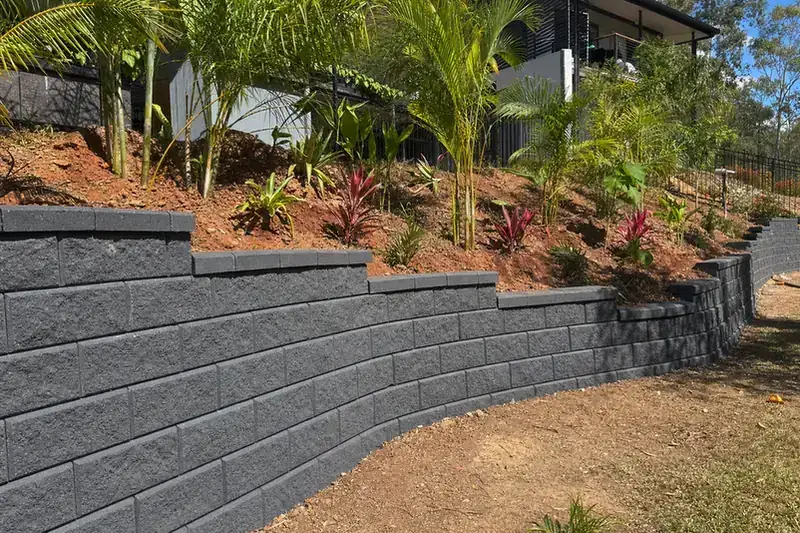
Summit Retaining Walls Cairns builds block retaining walls across Cairns and Far North Queensland. They can be anything from a low wall around a garden bed to a set of walls stepping down a steep yard. Block walls start from $650 per square metre of wall face, and we dig the base with our own excavator.
Get a free site visit
Tell us a bit about your block and we'll come out and have a look.
How We Build Block Retaining Walls
Retaining wall blocks are solid concrete and they interlock, so they stack without mortar, the cement glue you see between bricks. A lip or a pin on each block hooks onto the row underneath.
- STEP 01
A level base
The excavator digs a trench where the wall's going, and we fill it with crushed rock and pack it down hard. The first row of blocks, called a course, sits on top. If that row is even slightly off, it shows all the way up the wall, so we take our time with the level here.
- STEP 02
Blocks stacked and set back
Each course steps back a little from the one under it, so the finished wall leans into the hill. It's only a small lean, but it means the weight of the soil works with the wall instead of trying to tip it forward.
- STEP 03
Drainage behind the blocks
Behind the bottom course goes ag pipe, a slotted pipe that carries water away. As the wall goes up, the gap behind the blocks gets filled with gravel. Rain drains down through it and out, rather than soaking the soil against the wall.
- STEP 04
Mesh for taller walls, then the capping
On taller walls, geogrid, a tough plastic mesh, gets rolled back into the soil between some of the courses. It ties the wall to the ground behind it, and the engineer's design, the plan for your wall, says where it goes. Flat capping blocks finish off the top.
Pricing Your Block Retaining Wall
Block walls start from $650 per square metre of wall face, which is the wall's height times its length. Your price then depends on the wall's height, length and shape, and how easily a machine can get to it. We measure all that on the free site visit, then send through a written quote.
Height, and whether it needs geogrid
Go higher and you need more blocks, a deeper base and often geogrid in the soil behind.
Curves and steps
Every curve and step means cutting blocks to fit, which is slower than laying a straight run.
The block you choose
Blocks come in different sizes, colours and face finishes, and each one is priced differently.
Access for the machine and the deliveries
Blocks come on pallets, and a full pallet is heavy. If the truck can drop them near the wall and the excavator can reach, there's a lot less carting by wheelbarrow.


Want a price for your wall? Book a free site visit.
Where Block Walls Suit
Because the blocks are small, the wall can follow the ground, bending round a garden bed or stepping down the slope in levels. People mostly choose them over sleepers for that reason.
Block walls are a good fit for
- Curved walls around garden beds and lawns
- Walls built in levels down a slope
- Front yards where the wall is on show
- Spots where you want a solid face with no gaps between posts
When another wall might suit better
Laying blocks is slower than putting in sleepers, since every course gets checked for level. For a long straight run where looks matter less, concrete sleeper walls usually go in quicker.
If water pours down your slope every wet season, look at a gabion wall. It's made of wire baskets filled with rock, and the water runs straight through.
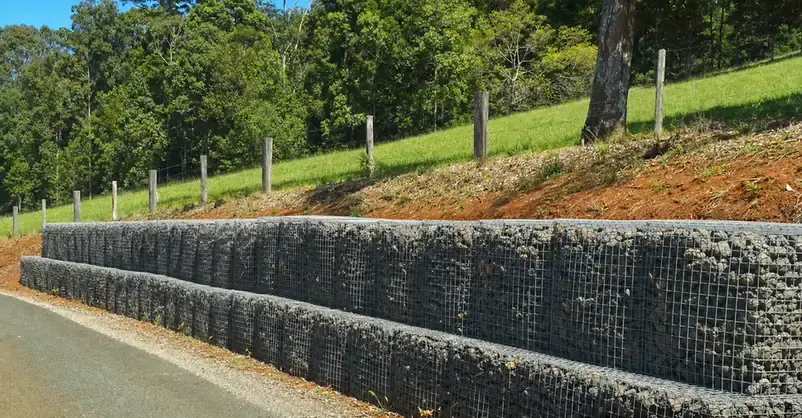 Gabion WallsWe fill wire baskets, called gabions, with rock and stack them into a wall. Water runs straight out through the gaps between the rocks.
Engineering and Council Approval
Plenty of block walls end up engineered, because the design is what sets how deep the base goes and how much geogrid sits behind. Height is usually what tips a block wall into needing that design and building approval. Being close to your house, your boundary or another wall usually does too.
We'll tell you at the site visit which way yours falls. If it needs the engineer and the approval, we organise both.
Block retaining walls
Frequently Asked Questions
Got another question? Our retaining wall FAQs cover approvals, drainage and site visits.
Block walls start from $650 per square metre of wall face, which is the height times the length. Height, curves and steps all add up from there, and so does the block you pick. We measure up when we come out, free of charge, and you get the exact price in writing.
Often, once they get tall or sit near the house, the fence line or another wall. Then you'll usually need an engineer's design and building approval. We have both in place before the trench for the base is dug.
They cope well, as long as the water behind them can get away. The blocks won't rot, and the gravel and ag pipe drain the soil quickly. If you see a block wall leaning after a big downpour, it's usually because the water was trapped.
A block has nothing in it to rot or rust. How long the wall lasts comes down to the base underneath and the drainage behind. We spend extra time packing the base hard and getting it level for exactly that reason.
Yes. A sweep around a lawn or a big tree is easy enough with blocks, and so is a corner that isn't square. Sleeper walls need straight runs between posts, so for a curved wall, blocks are what we'd use.
Other Work We Do
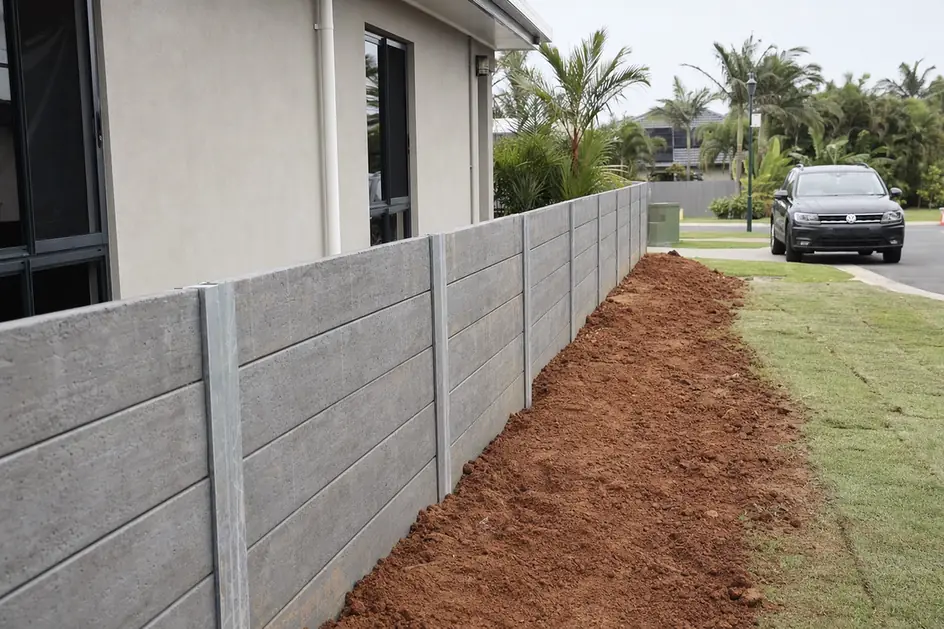
Concrete Sleeper Retaining Walls
Concrete sleepers slot in between galvanised steel posts, meaning the steel is coated in zinc to slow rust. The sleepers won't rot, and termites leave them alone.Read about concrete sleeper retaining wallsGabion Walls
We fill wire baskets, called gabions, with rock and stack them into a wall. Water runs straight out through the gaps between the rocks.Read about gabion wallsWe're based in Port Douglas and build walls from Cairns south to Tully, up on the Atherton Tablelands and north to Cooktown. Our service areas list the towns we cover.
Get a free site visit
Tell us a bit about your block and we'll come out and have a look.
In the notes, give us a rough length and height, and say if the wall curves or steps down.